Retail hiring has gotten weird. A lot of companies say they want personality, then interview you like a robot. Sephora is one of the few places that actually means it when they say they want you.
Getting hired at Sephora in 2026 is competitive. The brand has thousands of global locations and a fanbase of applicants who genuinely love beauty. Passion alone won’t cut it. The good news: Sephora’s hiring process is readable. There are patterns, and once you know them, the whole thing gets a lot less stressful.



This guide is for anyone who wants a real shot at working there, whether that’s a first job, a career pivot, or a lateral move into beauty retail.
The Sephora Job Search Starts in One Specific Place
Skip the job board rabbit holes. The official Sephora Careers page is where live openings appear first, and it’s the cleanest way to see what’s actually available in your area.
That said, LinkedIn and Indeed do pick up postings, usually a few days behind the source. If a role catches your eye on a job board, go verify it directly on the Sephora site before applying. Duplicate listings with outdated statuses are common.
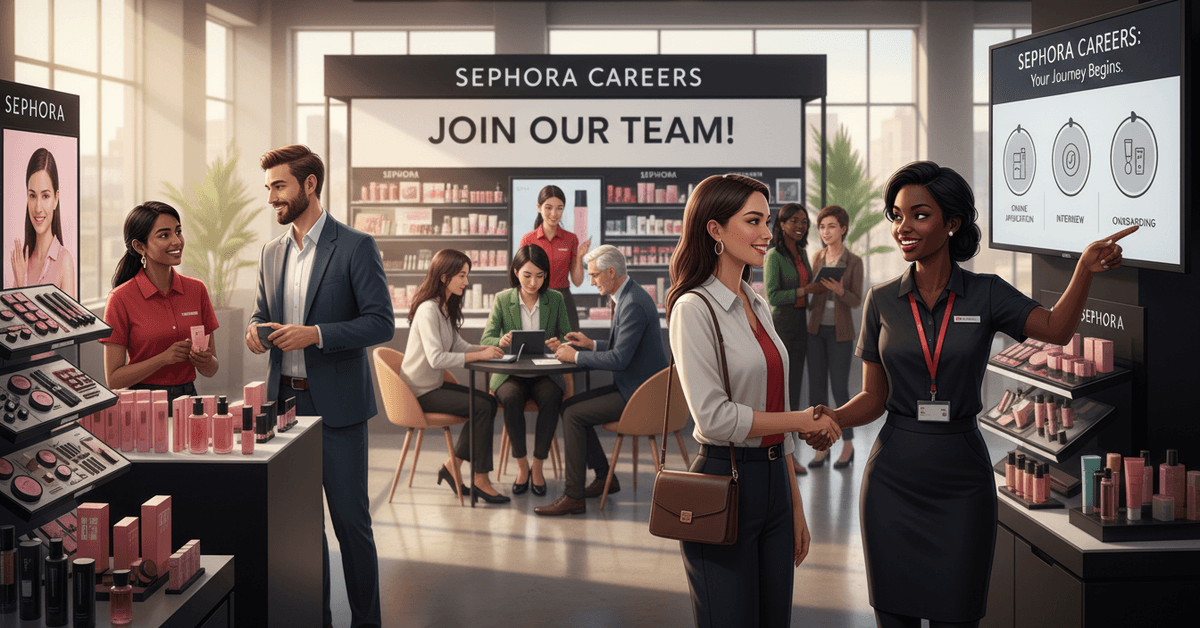
Seasonal hiring windows do fill fast. Sephora tends to ramp up staffing before major holidays and around product launch periods.
Applications submitted early in a seasonal window have historically gotten faster responses than those submitted in the last week before a deadline.
Roles That Go Beyond the Beauty Counter
A lot of applicants only think about Beauty Advisor roles. I think this is leaving serious opportunity on the table, especially for candidates who come from logistics, visual merchandising, or even IT backgrounds.
Sephora’s full role range includes:
- Beauty Advisor: Product recommendations, demo sessions, and customer education
- Cashier/Sales Support: Transaction handling and point-of-sale operations
- Stock Associate: Inventory management and back-of-house operations
- Visual Merchandiser: Store layout, display construction, and product placement
- Store Manager: Team leadership, performance tracking, and operational oversight
- Corporate Roles: Marketing, supply chain, human resources, and technology at head offices
The corporate track especially is underestimated. Sephora’s parent company LVMH has a wide network, and internal exposure to a brand like Sephora is valuable for anyone building a long-term career in retail or consumer goods.
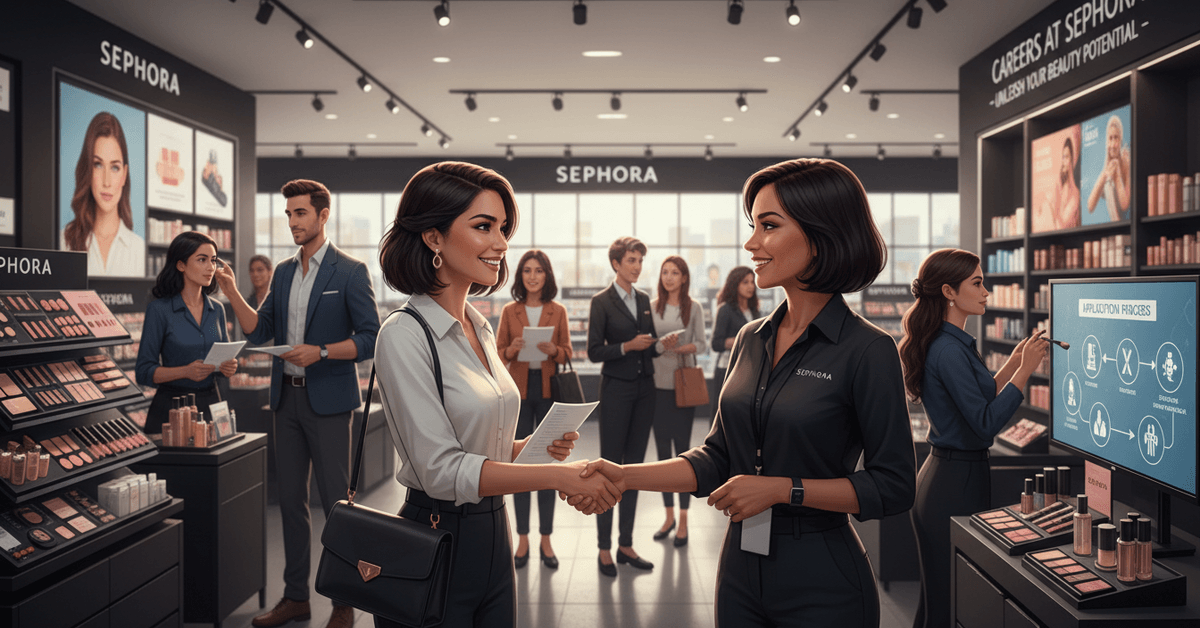
What the Sephora Application Process Actually Looks Like
Sephora’s process is consistent enough that you can prepare for each stage before it happens.
Stage 1: Resume and Profile Setup
Keep the resume tight and relevant. Customer service experience goes at the top, even if it’s from a completely different industry. Retail interviewers care about how you’ve handled real people, not whether the context was beauty-specific.
A cover letter isn’t always required, but including one for store roles is worth doing. Two or three sentences about why Sephora specifically (and not just any beauty retailer) reads better than a generic intro paragraph.
Stage 2: The Online Application and Assessment
Most applications include a short questionnaire or scenario-based assessment after the main form.
These questions tend to cover customer conflict situations and priority management. Sephora is looking for how you think, not whether you have a scripted answer.
I was skeptical that these assessments actually influenced hiring decisions until I saw how frequently interviewers reference specific questionnaire answers during in-person conversations. They’re reading your responses.
Stage 3: The Interview
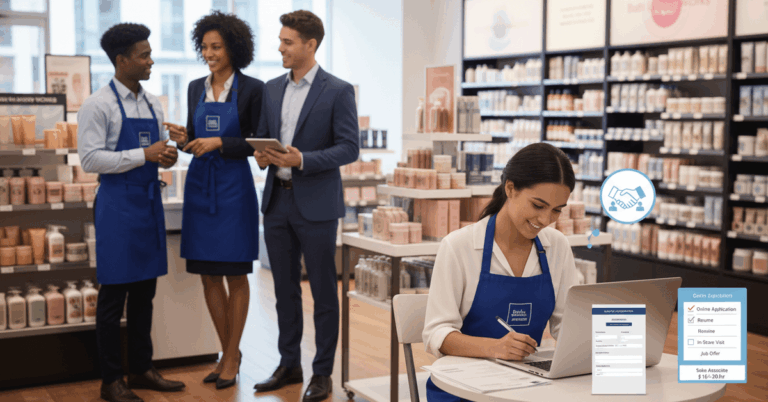
Expect an in-person interview at the store level. Group interviews happen more than people expect, especially during high-volume hiring periods. This isn’t a bad sign. It means the store is actively building out a team.
Role plays are common. Sephora interviewers sometimes ask candidates to walk them through a product recommendation scenario on the spot. The goal isn’t product expertise.
They’re watching for warmth, listening skills, and how you handle a moment of uncertainty.
Stage 4: The Offer and Onboarding
Offers typically follow within one to two weeks of the interview. Onboarding starts with product and brand training, often including hands-on demos during the first few days. New hires are expected to absorb a lot quickly.
What Sephora Interviewers Are Paying Attention To
The most common mistake I see in interview prep advice is the focus on product knowledge. People spend hours memorizing ingredient lists and brand histories when interviewers are paying more attention to something else entirely.
Communication style matters more than product recall.
A candidate who can articulate why they enjoy helping someone find the right foundation, even if they can’t name every formula on the shelf, will outperform a candidate who rattles off specs without any warmth.
The qualities that consistently come up in feedback from Sephora hiring processes include:
- Curiosity about products and trends, not just existing knowledge
- Comfort with teamwork across different role levels
- Reliability and schedule flexibility, especially around evenings and weekends
- Empathy in customer interactions, shown through real examples, however small
- Openness to learning, especially when admitting you don’t know something
That last one is where a lot of applicants underperform. Admitting uncertainty in an interview feels risky. At Sephora, it tends to go over well.
The One Interview Prep Move Most Guides Skip
Go into the store before your interview. Not to network, just to observe. Watch how the floor staff interacts with customers. Pay attention to pacing, how advisors approach someone who looks lost, and how product conversations start.
Bring one specific observation into your interview. Something like: “I noticed an advisor spent about five minutes helping someone narrow down skincare options, and the customer left with two products she clearly hadn’t planned on buying.”
That kind of detail signals that you understand the Sephora floor experience from the customer side, and it’s something very few candidates bother to do.
The Application Detail That Sephora Notices
Candidates who mention specific Sephora values in their cover letter or interview tend to get further than those who talk about beauty in general. Sephora has made inclusivity and self-expression central to its brand positioning for years.
Referencing those themes with a specific personal angle reads differently than generic enthusiasm.
Language skills are worth mentioning too. Locations in tourist-heavy areas or cities with multilingual populations do see a difference in how bilingual candidates are evaluated, and many applicants leave this off their resume entirely.
Roles That Lead Somewhere vs. Roles That Plateau
I genuinely disagree with the advice that any Sephora entry-level role is equally good as a career springboard.
The Beauty Advisor role is the most visible starting point, but Stock Associate and Visual Merchandiser roles often produce faster internal advancement because fewer candidates apply to them with career growth in mind.
Hiring managers at specialty retail stores tend to have more direct involvement in promoting visual and logistics staff because those teams are smaller and the gaps are more visible.
A Beauty Advisor who wants to move up is competing with a larger peer group.
Legal and Documentation Basics
Working at Sephora, like any retail employer, requires documentation of your right to work in the country where you’re applying.
This means a passport, work permit, or equivalent depending on your location. Some regions also set a minimum hiring age of 18, particularly for certain store roles.
Background checks and reference verification are part of the standard onboarding process. These don’t need to be stressful if you’re upfront about your history from the start.
For specific requirements by country, the Sephora Careers site is the most accurate resource since policies vary and can update.
| Role | Typical Starting Level | Growth Path |
|---|---|---|
| Beauty Advisor | Entry | Lead Advisor, Assistant Manager |
| Stock Associate | Entry | Logistics Lead, Operations |
| Visual Merchandiser | Mid-entry | Senior VM, Regional VM |
| Store Manager | Mid-senior | District Manager, Regional Director |
| Corporate Roles | Varies by function | Department lead, Cross-brand LVMH |
Each path moves at a different pace depending on location size and regional demand.
Questions People Ask About Getting Hired at Sephora
Q: Do I need beauty industry experience to get hired at Sephora? No previous beauty experience is required for entry-level roles. Customer service experience from any retail environment, food service, or even volunteering carries real weight. Sephora trains product knowledge in-house.
Q: How long does the Sephora hiring process take from application to offer? For store roles, the process typically runs two to three weeks from application submission to offer. Seasonal hiring windows can compress this to under two weeks when stores are actively building headcount.
Q: Can I apply to multiple Sephora locations at the same time? Applying to more than one location is fine, and many candidates do it. Just make sure any location-specific details in your cover letter or application match the store you’re actually targeting.
Q: Are part-time roles at Sephora a real path to full-time employment? Part-time to full-time transitions happen regularly at Sephora, especially for advisors who show flexibility and strong performance metrics during their first six months. The transition is not guaranteed, but it’s a documented route.
Q: What should I wear to a Sephora interview? Dress in a way that looks intentional and polished without being overdressed. Sephora culture prizes self-expression, so a cohesive personal look goes over better than a plain corporate outfit. Clean, put-together, and you.
Conclusion
Sephora hiring in 2026 rewards candidates who treat the process as a conversation, not a test. Prepare specific, bring your actual personality, and go in knowing which role fits your trajectory.
The stores moving fastest through hiring right now are those with genuine openings to fill, and those managers remember the candidates who came in ready to contribute.